What’s happening with Shamonda virus after France’s first human case?
“Shamonda virus”
100K+ curiousKenyaNigeriaIndiaNorwayCroatiaSweden
Also on their minds shamonda virus france · human shamonda virus · virus · shamonda viruses
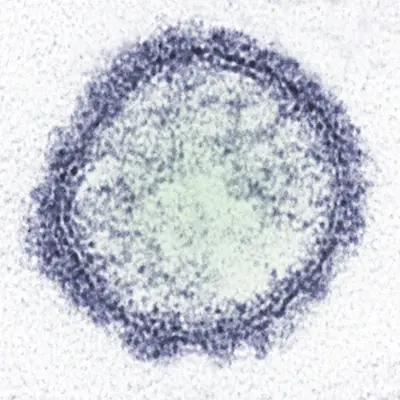
France has documented the first known human infection with Shamonda virus, a virus previously identified in animals. The patient, who had a severely weakened immune system, died in early October. Health authorities are investigating whether the infection contributed to his death; that has not been established.
The World Health Organization says the case appears isolated and there is no broader risk to the public at present. WHO is in contact with French authorities and is monitoring the investigation. The European Centre for Disease Prevention and Control has also identified this as the first recognised human infection.
Investigators are still trying to determine how the patient acquired the virus. Shamonda is transmitted among animals by bites from Culicoides midges, small insects resembling flies, but the route of infection in this case is unknown. The patient lived in an area where the virus was circulating in animals and the midges were present.
Shamonda virus primarily affects cattle, and has also been found in sheep, goats, horses and alpacas. In livestock it can cause signs such as fever, diarrhoea and reduced milk production. Infection during pregnancy may also lead to abnormalities in newborn animals. Those effects do not establish what happened in the French patient.
The virus was first identified in cattle in Nigeria in 1965 and has been found in Africa and Japan. It appeared in European livestock this summer, first in southern Germany and Switzerland, and has since been detected in animals elsewhere in Western Europe, including France. The reports describe a human case in France, not a case in Kenya.
Shamonda belongs to the Orthobunyavirus group, which includes related viruses such as Schmallenberg and Akabane. The animal spread in Europe gives authorities reason to investigate the unusual human infection, but it does not show that the virus is spreading between people. Further study is needed to clarify both transmission and the possible health risks.
French authorities are collecting information on the source of the infection and possible routes of transmission. WHO says it will share updates as it learns more. For now, the patient’s underlying condition and the uncertain role of the virus remain central to understanding the case.
Reporting
- Licensable picture: Congolese Dr Marie-France Shogogo, who died of the Ebola virus, buried in BuniaReuters Connect
- Bug virus: is a bug a virus, and what to do if your PC says it has one2-Spyware
- Giant virus yields potassium channel gene that illuminates complex protein evolutionPhys.org
- Beloved SLO dentist dies of West Nile virus at age 63. 'He was very strong'San Luis Obispo Tribune
- Ebola Deaths in Democratic Republic of the Congo Exceed 5,000وكالة الأنباء السعودية
- More than 5,000 die from Ebola in DR Congo's deadliest outbreakBBC
- Ebola ta kashe sama da mutane 5,000 a KwangoDW.com
- DR Congo Ebola case: Wat next for DRC as Ebola deaths hit ova 5000 wit 10,351 cases for second deadliest outbreakBBC
More sources (32)
- Death toll from Ebola outbreak in DR Congo surpasses 5,000Anadolu Ajansı
- International warning of Ebola outbreak in Africa....arabcanadanews.ca
- Ebola death toll in DR Congo surpasses 5,000سانا
- Ebola medics dance as last patients at Democratic Republic of Congo facility are dischargedinkl
- Ebola medics dance as last patients at Democratic Republic of Congo facility are dischargedAOL.com
- Joy as last Ebola patients at DR Congo facility dischargedYahoo
- DRC Ebola death toll nears 5,000 as Africa CDC honors fallen doctorThe Eastleigh Voice
- Congo's Ebola deaths top 5,000 as worry of continent-wide spread mountsBay News 9
- DRC Ebola outbreak kills more than 5 000Channel Africa
- Smrtonosni virus širi se zabrinjavajućom brzinom: Više od 5000 mrtvih...Dnevnik.hr
- Ebola outbreak in the Democratic Republic of Congo surpasses 5,000 deaths; WHO warns of risk of spread.Vietnam.vn
- Researchers traced the spread of HSV-1 in a three-dimensional skin model — News-MedicalUA.NEWS
- DR Congo Ebola death toll nears 5,000 as Africa CDC honors fallen doctorCGTN
- Skin organoids reveal how herpes simplex virus spreads between cellsNews-Medical
- Ebola: Young doctor dies treating patients in DR CongoDaily Post Nigeria
- Ebola: Africa CDC mourns as DRC doctor dies from virusPremium Times Nigeria
- Doctor Dies of Ebola in DR Congo -Africa CDCTVC News
- Templeton man dies from West Nile virus, family saysA-Town Daily News
- Experts warn of wider spread as Ebola outbreak reaches plateauKCAU 9 News
- Templeton man dies from West Nile virus, family saysPaso Robles Daily News
- AI-Designed Phage Treatment of Resistant Bacterial InfectionContagion Live
- Viruses as master builders of complex proteinsTU Darmstadt
- Ebola: 20 discharged from quarantine in Kenya, 98 remainDaily Nation
- Duale: Kenya to be declared Ebola-free after 42 daysThe Star, Kenya
- A Deadly Virus Has Been Hiding in Brazil for 142 Years – and Scientists Just Uncovered a Hidden DangerSciTechDaily
- First known human case of Shamonda virus reported in France; patient diesDown To Earth
- Woman with Ebola in Nigeria confirmed as wife of Swiss diplomatBBC
- Shamonda virus, the livestock pathogen detected in human for the first time | ExplainedThe Hindu
- Swiss Government denies Ebola patient traveled to Congo, contradicting UgandaDaily Nation
- What is Shamonda, the livestock virus found for the first time in a person in France?CNN
- WHO confirms first documented human Shamonda virus case in FranceNews On AIR
- First human case of Shamonda virus reported in France as patient diesUN News