Updated on November 25, 2026 at 13:28 UTC
A report claims that an AI has produced a proof of the Riemann hypothesis spanning 17 million lines.
Updated on November 25, 2026 at 12:31 UTC
An Anthropic mathematician has reportedly claimed to have solved the Riemann hypothesis with Claude. The supplied reports do not provide details of the proposed proof.
Updated on November 23, 2026 at 22:25 UTC
A reported AI result did not prove the Riemann hypothesis; it raised the lower bound for the proportion of zeros on the critical line from 41.6% to 67.2%.
Updated on November 23, 2026 at 21:29 UTC
Independent mathematicians have now confirmed that Levent Alpöge’s proof establishes the Riemann hypothesis. The Lean Focused Research Organization and Mathlib Initiative said on November 21 that they had full confidence in both the statement and the proof.
Updated on November 23, 2026 at 19:27 UTC
Mathematician Levent Alpoge announced that he had proved the Riemann Hypothesis in collaboration with Anthropic’s Claude. The reported formal proof, written in Lean, is approximately 17 million lines long, and the Lean and Mathlib communities said they had confirmed it.
Updated on November 23, 2026 at 18:27 UTC
The Lean and Mathlib communities have certified Levent Alpöge’s Claude-assisted proof of the Riemann hypothesis. Released as a 17-million-line Lean library, the proof compiled without errors, though the Association for Human Mathematics says no human can yet claim to understand it.
Updated on November 23, 2026 at 17:27 UTC
Anthropic mathematician Levent Alpöge says he and Claude have proved the Riemann hypothesis. The Lean Focused Research Organization and Mathlib Initiative report that they independently verified his Lean code and are fully confident in the proof.
Updated on November 23, 2026 at 16:32 UTC
Anthropic mathematician Arpoge and the AI Claude reportedly announced a proof of the Riemann Hypothesis, releasing about 17 million lines of Lean code. Official recognition is pending as experts continue to scrutinize the claim.
Updated on November 23, 2026 at 15:28 UTC
Levent Alpoge, a mathematician at Anthropic, says he and Claude have proved the Riemann Hypothesis and its generalization. The claimed Lean proof spans more than 17 million lines; Andrew Sutherland of MIT reported that its files compiled without errors.
Updated on November 23, 2026 at 14:28 UTC
Anthropic mathematician Levent Alpoge has released a four-page memo and a formal proof of the Riemann Hypothesis written in Lean, comprising about 17.37 million lines. The Lean and Mathlib communities said the formalized statement and proof are correct, though broader review by mathematicians is still needed.
Updated on November 23, 2026 at 13:24 UTC
Mathematician Levent Alpöge has announced that he produced a proof of the Riemann hypothesis with help from an AI model, outlining the claim in a four-page statement on his website.
Updated on November 23, 2026 at 13:03 UTC
The Lean and Mathlib communities say they independently verified Levent Alpöge’s AI-assisted proof of the Riemann Hypothesis, with dozens of people successfully compiling the formalized work and reproducing the same results.
Updated on November 23, 2026 at 11:18 UTC
Mathematician Levent Alpöge said he developed a proof of the Riemann Hypothesis with Claude, and a community specializing in computer-verified proofs said it had checked the submission and found it correct. The proposed proof is presented as computer code rather than a conventional mathematical paper.
Updated on November 23, 2026 at 10:19 UTC
Anthropic’s Levent Alpöge claims to have an AI-assisted proof of the Riemann hypothesis, but no human has yet read it.
Updated on November 23, 2026 at 09:19 UTC
Anthropic mathematician Levent Alpöge says he worked with Claude for about six weeks on a claimed proof of the Riemann hypothesis, formalized in the Lean proof assistant. Independent verification is still underway, so the claim remains unconfirmed.
Updated on November 23, 2026 at 04:19 UTC
A mathematician at Anthropic and the company’s AI, Claude, have presented a proposed proof of the Riemann hypothesis. It has passed computer verification, but human mathematicians have not yet reached the point of understanding its contents.
Updated on November 23, 2026 at 03:19 UTC
Mathematician J. L. Nielsen has challenged the announced Riemann Hypothesis proof, arguing that some key objects in its Lean code are defined in ways that make required conditions tautologies. The dispute centers on whether formal verification of the code’s derivation also confirms that its definitions capture the intended mathematical objects.
Updated on November 23, 2026 at 02:19 UTC
Anthropic mathematician Levent Alpoge says he and Claude have produced Lean-formalized proofs of the Riemann hypothesis and the generalized Riemann hypothesis. The claim has not been officially accepted, and mathematicians are still scrutinizing the work.
Updated on November 23, 2026 at 01:18 UTC
Anthropic mathematician Levent Alpoge announced on November 20 that he and Claude had produced a formal Lean proof of the Riemann Hypothesis. The Lean community said it was confident in the proof, but the Clay Mathematics Institute still considers the problem unsolved, and a human-readable version has not been released.
Updated on November 23, 2026 at 00:17 UTC
The Lean and Mathlib communities say independent checks using different tools found the 17-million-line formal proof attributed to Levent Alpöge and Claude correct. Mathematicians still need to understand its ideas, and the Clay Mathematics Institute has not officially confirmed the Riemann Hypothesis as solved.
Updated on November 22, 2026 at 23:17 UTC
Levent Alpöge, a mathematician working at Anthropic, posted a memo on November 20 claiming that he and Claude had proved the Riemann Hypothesis and its generalized version. The proof was released as Lean files and was still being verified as of November 21; Anthropic had not commented.
Updated on November 22, 2026 at 22:17 UTC
The Lean FRO and Mathlib Initiative say they have full confidence in Levent Alpöge’s Claude-assisted proof of the Riemann hypothesis. The proof, released as a Lean library of about 17 million lines, compiles and has passed multiple independent proof checkers.
Updated on November 22, 2026 at 21:17 UTC
The Justin Sun Prize announced up to $2 million in awards for two Riemann Hypothesis research results, with payment contingent on final verification; organizers said the awards would not constitute academic endorsement of a proof.
Updated on November 22, 2026 at 20:17 UTC
The Lean and Mathlib community says it has confirmed Stanford mathematician Levent Alpöge’s proof of the Riemann hypothesis. The proof, published as 17 million lines of Lean code, was independently checked by dozens of people.
Updated on November 22, 2026 at 19:18 UTC
Lean and Mathlib say Anthropic mathematics researcher Levent Alpöge has produced a correct formalized proof of the Riemann Hypothesis. The proof, implemented in Lean and spanning 17 million lines of code, passed multiple independent checks.
Updated on November 22, 2026 at 18:18 UTC
Reports say Levent Alpöge released about 17.4 million lines of Lean code alongside his claimed proof, intended to let a computer check its logical steps. He has also claimed the approach resolves the Generalized Riemann Hypothesis.
Updated on November 21, 2026 at 16:17 UTC
Recent reports describe claims that the Riemann hypothesis has been solved using AI and human mathematical methods, including a claim involving Anthropic’s Claude. The headlines do not provide details establishing that the proof has been verified.
Updated on November 21, 2026 at 15:16 UTC
After Anthropic mathematician Levent Alpöge said he had worked with Claude to find a proof of the Riemann Hypothesis, Stanford released an all-human competing draft hours later.
Updated on November 21, 2026 at 13:16 UTC
Anthropic mathematician Levent Alpöge says he and Claude have found proofs of the Riemann Hypothesis and the Generalized Riemann Hypothesis. He released Lean-formalized proof code, saying the full written argument exceeded 250,000 pages; the claims do not establish that the problems have been solved.
Updated on November 21, 2026 at 12:16 UTC
Independent researchers have compiled Levent Alpöge’s Lean formalisation, but checks are still under way to confirm that it proves the Riemann Hypothesis as ordinarily understood. The claim has not been accepted as a mathematical result.
Updated on November 21, 2026 at 11:16 UTC
Anthropic mathematician Levent Alpöge says Claude helped develop a proof of the Riemann hypothesis. The claim has not yet been independently verified.
Updated on November 21, 2026 at 10:16 UTC
An Anthropic researcher has claimed Claude cracked the Riemann hypothesis, while other reports describe claims of breakthroughs by two mathematicians.
Updated on November 21, 2026 at 09:16 UTC
Levent Alpöge’s Claude-assisted proof has drawn independent mathematical checks, with researchers reporting that its Lean formalization appears to support the claimed result. A separate human-authored proposed proof by Alessandro Maria Masullo also surfaced the same day; neither report indicates that the result has been formally accepted.
Updated on November 21, 2026 at 08:17 UTC
An Anthropic mathematician has claimed to solve the Riemann hypothesis using Claude; the headline does not provide details of the claimed proof.
Updated on November 21, 2026 at 07:16 UTC
Anthropic mathematician Levent Alpöge says he and Claude have found a proof of the Riemann Hypothesis, presented as computer-verifiable code rather than a conventional paper. The claimed proof reportedly runs to 17 million lines, and independent verification is ongoing.
Levent Alpöge , a mathematician at AI company Anthropic , says he and Claude have found a proof of the Riemann hypothesis , a conjecture that has remained open since Bernhard Riemann proposed it in 1859. Alpöge posted a four-page statement about the work on his personal website on November 20, calling it a discovery rather than presenting it as an established result.
The distinction matters. Alpöge’s statement says, “I believe I have, working with Claude, discovered a proof.” The claim has attracted early attention from independent mathematicians, with some described as judging it “almost certainly correct” after initial rechecking. But the verification has only just begun; final confirmation and a proof that mathematicians can fully understand are still outstanding.
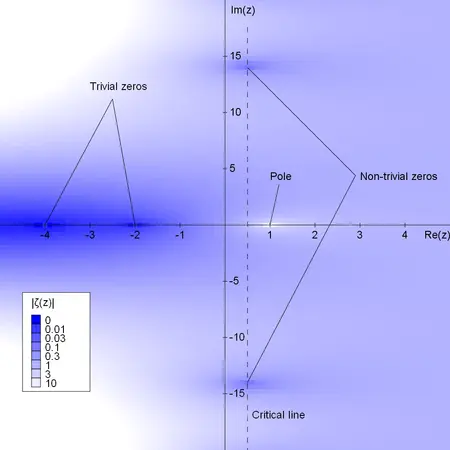
The Riemann hypothesis concerns the zeros of the Riemann zeta function. It says that every nontrivial zero has a real part of one-half, placing those zeros on a particular line in the complex plane. The conjecture matters because it would establish deep structure in how prime numbers —such as 2, 3, 5 and 7—are distributed.
That connection has made the problem a central challenge in number theory. A proof would also strengthen many mathematical results that depend on the hypothesis. The Clay Mathematics Institute has attached a $1 million prize to its solution, but publishing a claim and supporting files does not itself show that the argument is correct.
Alpöge says the method reaches beyond the original conjecture to the Generalized Riemann Hypothesis , which applies related questions to broader mathematical functions. He also says he and Claude formalized the arguments without assumptions. Those statements describe the scope of his proposed work; they do not settle whether its reasoning withstands scrutiny.
Claude is Anthropic’s AI model, and its role in the claim has put the collaboration itself under examination. The central question remains mathematical: whether every step of the argument is valid. Independent checking will need to establish that, rather than rely on the fact that an AI system helped produce or formalize it.
For now, the Riemann hypothesis remains unconfirmed as solved. Alpöge’s posted proof gives mathematicians material to examine, and the early reactions are notable, but they are not a final verdict. The claim also arrives alongside a separate reported proof effort by Alessandro Masullo, adding another argument for careful review rather than an immediate declaration that the problem is settled.
Reporting More sources (32) Lean and Mathlib Communities Verify AI-Assisted Proof of the Riemann Hypothesis, One of the Seven Millennium Prize Problems mezha Anthropic's Levent Alpöge Claims AI-Assisted Proof of the Riemann Hypothesis, but No Human Has Yet Read It xenospectrum Did AI Prove the Riemann Hypothesis? A 40-Something Office Worker Who Uses Claude Code Daily Investigates the '17 Million-Line Proof' note Is it true that AI has 'solved' one of mathematics' greatest challenges? A non-math sales professional explains the Riemann Hypothesis frenzy note AI News Flash: Anthropic Raises $81.3 Billion in Largest IPO Ever, AI Tackles the Riemann Hypothesis (November 23, 2026 Issue) note AI claims proof of 167-year-old Riemann hypothesis The Chosun Ilbo Did AI Solve a Super-Difficult Math Problem? What Happened with Claude and the 'Riemann Hypothesis' note Anthropic mathematician Levent Alpöge says Claude helped prove the Riemann hypothesis, verification pending Crypto Briefing Two organizations say they verified proof of Riemann hypothesis using Claude AI — The Guardian UA.NEWS ‘The sacred object in mathematics’: the Riemann hypothesis, AI and a proof no human can read The Conversation “A 167-Year-Old Proof?” What Happened with the Riemann Hypothesis Tackled by Claude and a Mathematician? note 【AI Proves Millennium Prize Problem】Did AI Solve the 167-Year-Old "Riemann Hypothesis"? Mathematician Says, "Claude Flew, Danced, and Sparkled" note 【Is the History of Mathematics Changing?】Anthropic Mathematician Proves the Riemann Hypothesis with Claude. Has AI Finally Surpassed the Pinnacle of Human Intelligence? note Has AI solved the Riemann hypothesis? Claim makes waves at 200th birthday event in China South China Morning Post Wang: Riemann proof marks superintelligence turn StartupHub AI AI claims proof of Riemann hypothesis The Chosun Ilbo AI proves 167-year-old Riemann hypothesis The Chosun Ilbo AI Chatbot Claude Claims Proof of 167-Year-Old Riemann Hypothesis en.sedaily Riemann Hypothesis Proof Announcement, Peach and Tower Records Massive Leaks | Tech Day Today note The controversy over the proof of the Riemann Hypothesis has reignited, with mathematicians questioning the key definition's validity chaincatcher AI-assisted proof claimed for famed Riemann Hypothesis The Asahi Shimbun Mathematicians claim proof of 167-yr-old Riemann hypothesis using AI, human methods Bizz Buzz Riemann Hypothesis — AI Solves $1M Math Millennium Prize Problem en.koreadaily Why was Levent Alpöge, of all people, the one to prove the Riemann Hypothesis? eu.36kr Anthropic mathematician claims to have proved Riemann hypothesis with help of Claude europesays Anthropic researcher claims Claude helped him prove the Riemann hypothesis The Next Web Riemann Hypothesis, a 167-Year-Old Proof? — Why Anthropic's Mathematician and Claude Won't Receive the Prize Money Despite Passing Verification note Claude solves mathematical problem that remained unsolved for 160 years: What is Riemann hypothesis? Mint Did Claude just prove the Riemann Hypothesis? Seeking Alpha [Manga] Taking on the Riemann Hypothesis with Claude! A 167-year-old challenge and the verification of the proof note Thinking about the Riemann Hypothesis: Can Humans Verify AI's Answers? note Claim That AI Proved the "Riemann Hypothesis" Stirs Mathematics Community KMIB Published November 25, 2026, 13:28 UTC